
Post-Remediation Mold Clearance Testing in Bozeman: What It Proves
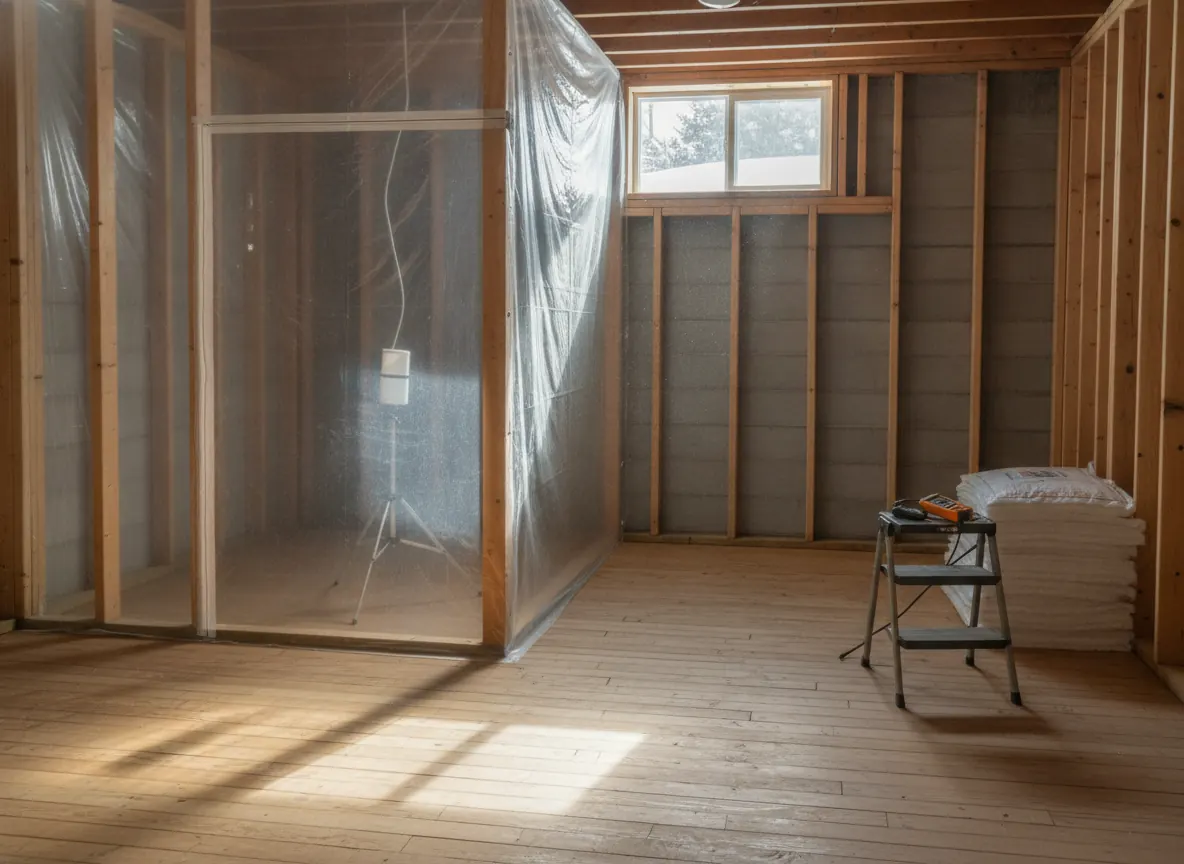
A post-remediation clearance test is a check done after mold removal, before the plastic containment comes down, to confirm the work area is back to normal. An independent tester looks for leftover growth, confirms materials read dry, and takes air samples inside the finished work zone to compare against outdoor air and an unaffected room. If the numbers line up, the area passes. In the Bozeman area a clearance test typically adds $200 to $400 to a job, and it is optional on most homes. Whether it’s worth paying for depends on what you need to prove, and to whom.
What a post-remediation clearance test actually checks
A clearance test isn’t one lab number. It usually combines three things:
- A visual check of the contained area for any remaining growth or dust.
- Moisture readings showing that framing, subfloor and any remaining drywall are dry, taken with the same kind of meters used at the original mold inspection.
- Air samples pulled inside the work zone and compared with an outdoor control and a room that was never affected. Sometimes the tester adds a surface swab or tape lift on a spot that was cleaned.
The comparison is the point. Montana has no state mold license, and there are no federal, state or local mold exposure standards, so no lab can hand you a figure that says a Bozeman home is “safe.” What a tester can tell you is whether the air in the finished zone looks like the air outside and in the rest of your house. That relative answer is what a clearance test is built to give.
Why the clearance tester should be independent
Because Montana doesn’t license mold remediation, no state inspector signs off on the work. Grading is left to whoever you hire. The cleanest arrangement is third-party clearance, so the company grading the work is not the company that did it.
When you collect quotes, ask each independent local company whether it arranges outside clearance testing, which lab analyzes the samples, and whether the result comes back as a written report with photos and readings. It’s also fair to ask what training the people doing the work have (IICRC or ACAC training is a reasonable thing to look for) and to see their containment and cleaning protocol in writing.
When clearance testing is worth it in Bozeman
A few situations come up again and again in Gallatin Valley housing:
Rentals near MSU. Only about 44.7 percent of Bozeman homes are owner-occupied, about 35 percent of housing is apartments and other multi-unit buildings, and Montana State University enrolled a record 17,165 students in fall 2025. Montana’s Mold Disclosure Act, MCA 70-16-703, says landlords who know of mold must disclose it to future tenants, along with any prior testing, the results and any mitigation. A passed clearance report is a clear way to show what was done and when. Our rental property mold page covers what else belongs in that file.
Selling a home. The same statute applies to sellers who know of mold. With Bozeman’s median home value around $687,900, buyers ask pointed questions. A clearance report filed alongside the remediation scope and the moisture-fix receipts answers them on paper. For how the law works, see our Mold Disclosure Act guide, and talk to a Montana attorney about your own sale.
Insurance claims. When mold follows a sudden covered event such as a burst pipe, insurers want documentation. Dated photos, the written scope and a clearance report make one tidy file.
Someone sensitive in the house. If a person in the home has asthma, allergies or another respiratory condition, clearance gives an objective before-and-after. Health questions still belong with a doctor.
When you can usually skip it: a small, contained job on hard surfaces where the moisture source is fixed and you aren’t selling, renting or filing a claim. A visual check and dry meter readings may be enough.
How clearance timing fits a Bozeman winter job
Clearance happens after removal and drying, and before rebuild. That order matters here. In January, lows average about 12°F and homes are sealed tight, so condensation-fed growth on exterior walls, window frames and attic sheathing is the typical winter problem, whether it’s an older house near Cooper Park or a newer build in Baxter Meadows (more on that on our Bozeman neighborhood page). Drying those materials to normal moisture content comes first; sampling a damp wall tells you little.
Plan on about one extra day for sampling and lab turnaround. Small bathroom jobs often finish in one day; basements, crawl spaces and attics typically take two to four; water-damage jobs add two to three days of drying first. The clearance test slots in at the end, with the plastic still up. The remediation process page shows where it falls step by step.
What happens if the area fails clearance
A failed clearance is information, not a disaster. It usually means dust or growth was missed, or a material is still wet. The fix is more HEPA vacuuming and cleaning inside the same containment, more drying, or removing a piece of material that turned out to be affected, then sampling again. That’s why the containment stays up until the test passes.
Clearance also can’t promise the mold won’t come back. Mold returns only when moisture returns, so the lasting fix is the bath fan, the attic air sealing, a vapor barrier in a Four Corners crawl space over a shallow water table, or grading that keeps spring snowmelt away from the foundation.
Get a quote that spells out clearance
If you want clearance testing, ask for it on the written scope so the price, the lab and the timing are listed before work starts. Typical ranges for every kind of job are on the mold remediation cost guide. Request a free quote and mention whether you need the report for a rental, a sale or an insurance file, and we’ll connect you with independent local companies that can include it.
Clearance testing FAQ
Is a clearance test required in Montana?
No. Montana has no state mold license and no mold exposure standards, so clearance testing is optional on residential jobs. It is most useful for rentals, home sales and insurance files.
How much does a post-remediation clearance test cost in Bozeman?
It typically adds $200 to $400 to a job in the Bozeman area, depending on how many samples the lab runs, and usually about a day for sampling and lab turnaround.
Who should do the clearance test?
Ideally an independent tester who did not do the remediation, so the company grading the work is not the company that did it. Ask for a written report with photos, moisture readings and lab results.