
Mold in a Bozeman Condo: Who Pays, the Owner or the HOA?
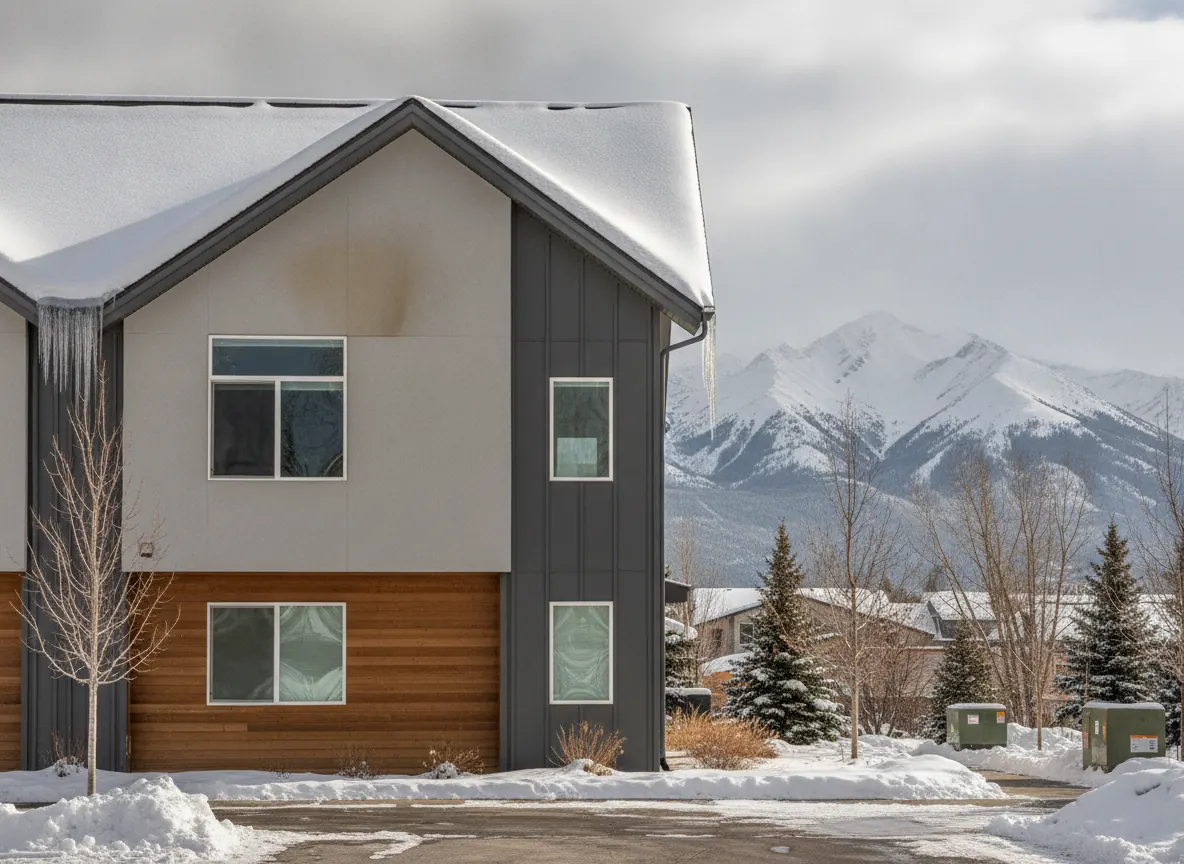
When mold shows up in a Bozeman condo, who pays depends on where the moisture came from and what your association’s bylaws say. Under Montana’s Unit Ownership Act (MCA 70-23-504), maintenance, repair and replacement of common elements is carried out only as the bylaws provide, and the owners’ association, through its manager, may enter a unit when it needs to repair common elements or make emergency repairs. So the first question for condo or HOA mold isn’t who to blame. It’s whether the water came from a common element or from something inside your unit. The bylaws take it from there.
Why condo and HOA mold questions come up so often in Bozeman
About 35% of Bozeman’s housing is apartments and other multi-unit types. The northwest subdivisions, including Baxter Meadows, Valley West, Flanders Mill, Cattail Creek, Norton Ranch and West Winds, mix condos with HOA-managed homes. Nearly 45% of the city’s housing was built after 2000, and much of it is sealed tight for energy performance. That tightness keeps the heat in, and it keeps moisture in too.
With January lows averaging around 12°F, warm indoor air from showers, cooking and breathing condenses on cold window frames, exterior-wall corners and closets on north walls. In a single-family house, all of that belongs to the owner. In a condo, the window may be yours while the wall behind it belongs to the association.
Snow adds a second source. Bozeman gets roughly 86 to 91 inches a year, and ice dams push meltwater under shingles at the eaves. One Montana company reported that about 60% of its prior-year ice-dam calls already had interior damage by the time it arrived, and north-facing roofs were the worst. A ceiling stain in a top-floor unit can trace back to the roof above it. Whether that roof is a common element is a question for your bylaws.
Owner or HOA? Trace the moisture source first
Mold is a moisture problem, so the source shapes the whole conversation. Before anyone talks about the bill, find out where the water came from:
- Inside your unit: a bathroom fan that doesn’t work, a humidistat set too high, a leaking appliance or a shower that never dries. The EPA says your humidistat is set too high if moisture collects on windows and other cold surfaces. It also says bathroom fans should exhaust directly outdoors, not into an attic or another space in the building.
- From a shared part of the building: roof leaks and ice dams, exterior walls, the foundation, or a leak coming from a neighbor’s unit. In these cases, the bylaws’ list of common elements matters most.
- A mix of both: a bathroom fan ducted into a shared attic can carry moisture from one unit into a space the association maintains.
A mold inspection with moisture mapping is often the cleanest way to settle the question, because the written findings show which materials are wet and where the water is coming from. That record also helps if an insurer gets involved. Our guide to mold and insurance in Montana covers that side.
What Montana condo law says about mold, and what it leaves to the bylaws
The Unit Ownership Act doesn’t set a specific rule for mold. MCA 70-23-504 says repair and replacement of common elements happens only as the bylaws provide. It also lets the association, through its manager, enter a unit to maintain, repair or replace common elements or to make emergency repairs. For a Bozeman owner, that means two practical things:
- Read the maintenance section of your bylaws and see which parts of the building are listed as common elements.
- If the association needs to open a wall or ceiling in your unit to reach a common element, the statute allows it to enter for that purpose.
Montana has no state mold remediation license, so whoever ends up hiring the work, owner or association, should ask for IICRC or ACAC training and a written protocol. When it’s time to sell, the Montana Mold Disclosure Act (MCA 70-16-703) requires sellers and landlords who know about mold to disclose it, along with any prior testing, results and mitigation. The Disclosure Act guide explains that part. If you rent your unit out, see the rental property mold page.
Big Sky and other second-home condos
Condo mold in Big Sky follows its own pattern. Of roughly 3,504 housing units there, about 57% are listed as vacant, mostly second homes. A slow leak can run for weeks before anyone opens the door. MSU Extension’s guidance is to discard porous items that stayed wet for more than two days, so a leak found late usually means more material comes out. For absentee owners, agreeing with the association manager on who checks the unit during the winter matters as much as who pays afterward.
How to handle condo mold without a standoff
- Photograph the growth and any water staining, and write down the date.
- Tell the association manager in writing, especially if the source might be the roof, an exterior wall or a neighboring unit.
- Keep indoor humidity under 50%, which is MSU Extension’s target, and run the bath fan after showers.
- Don’t take on more than about 15 square feet yourself. MSU Extension suggests calling a professional above that.
- Get a written scope that lists what will be removed, how the area will be contained and what will fix the moisture, so the owner and the association are working from the same document.
- If a buyer or the board wants proof the work is finished, ask about a post-remediation clearance test.
Containment matters more in a shared building. The work area should be sealed in plastic under negative air with HEPA filtration so spores aren’t pushed into hallways or the unit next door. For typical Gallatin Valley price ranges, see the mold remediation cost guide. For neighborhood-by-neighborhood detail, see the Bozeman service area page.
Getting a quote for condo mold in Bozeman
If you own a condo in Bozeman, Belgrade or Big Sky and aren’t sure whether the mold is your responsibility or the association’s, start with a written scope from an independent local company. Request a free quote and mention in the form that it’s a condo, so the scope can note any shared walls, ceilings or attic space.
Condo and HOA mold FAQ
Does the HOA have to pay for mold in my Bozeman condo?
Montana law doesn’t answer that directly. MCA 70-23-504 says repairs to common elements are carried out as the bylaws provide, so it depends on whether the moisture came from a common element and what your bylaws give the association to handle.
Can my HOA enter my unit to fix a mold problem?
Under MCA 70-23-504, the association, through its manager, may enter a unit when it’s needed to maintain, repair or replace common elements or to make emergency repairs.
Do I have to disclose past condo mold when I sell?
Under the Montana Mold Disclosure Act, sellers who know of mold must disclose it, along with any prior testing, results and mitigation. Keeping the written scope and any clearance report makes that easier.
Worried about mold? Get a straight answer and a free quote.
Tell us what you're seeing. We reply fast, usually the same day, with a clear plan and typical pricing.